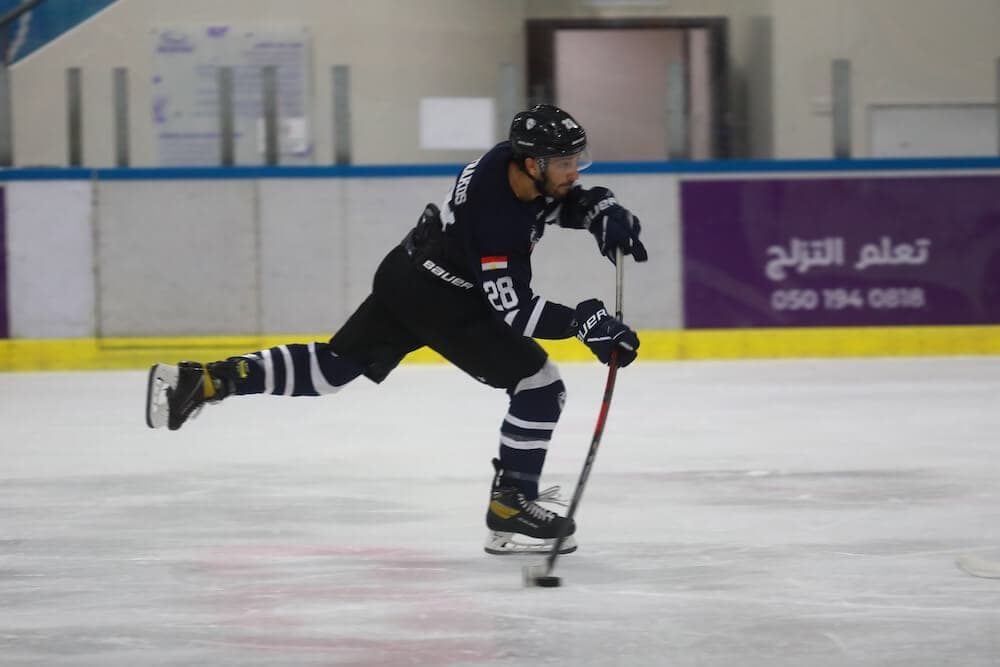
CAIRO, EGYPT — Ask where ice hockey is played and the answer usually runs through Canada, Scandinavia and the Russian north. It rarely runs through the Arab world. That answer is now out of date. Across Egypt, the United Arab Emirates and Oman, club teams are playing organised, competitive hockey against one another on a recurring circuit — with standings, officials, trophies and rivalries that carry from one year to the next.
This is not an exhibition curiosity. It is a small, young, fast-improving hockey region, and it is worth understanding on its own terms.
Which countries play ice hockey in the Middle East?
The competitive core of the regional club game right now sits in three countries:
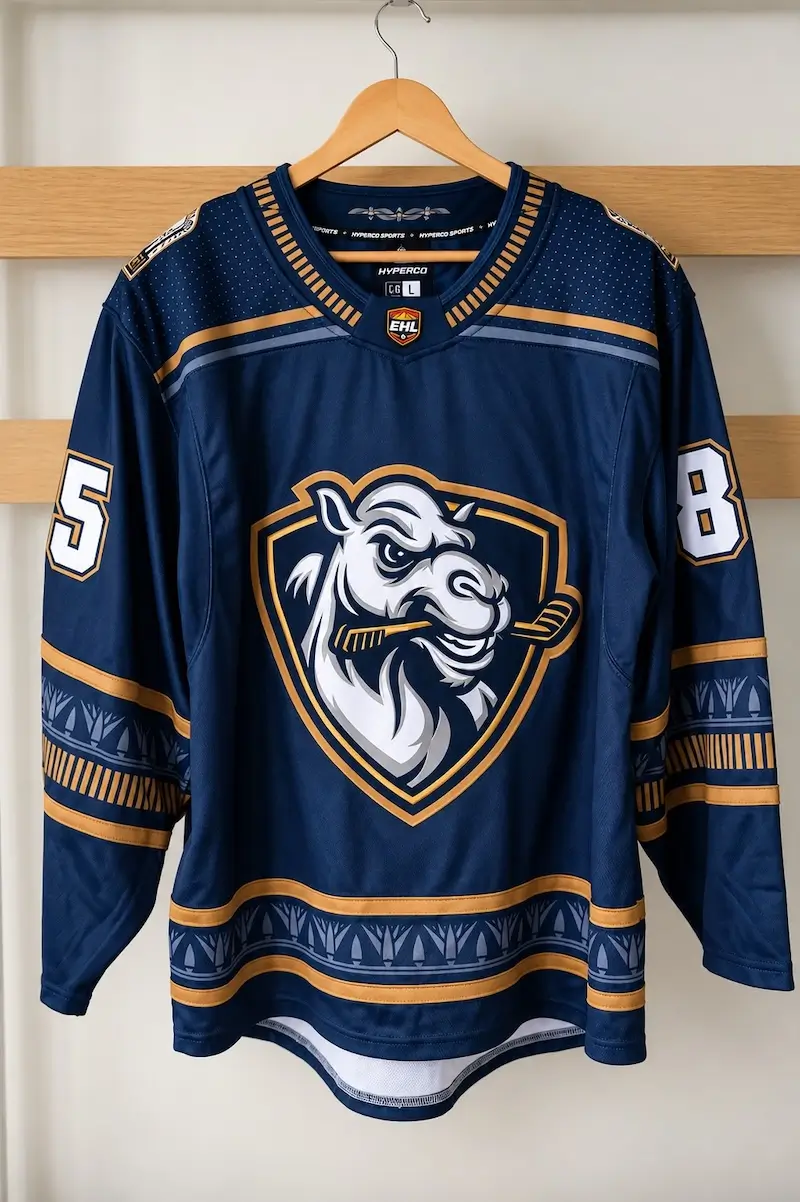
- Egypt — home of the Egyptian Hockey League (EHL), the country’s only organised ice hockey league, headquartered in Cairo. Its founding club, the Cairo Nomads, is Egypt’s first organised ice hockey team.
- The United Arab Emirates — the region’s most established hockey infrastructure, and the host of the Union Classic in Al Ain. Emirati clubs including the Cyber Bedouins and the Dubai Sandstorms are among the circuit’s strongest sides.
- Oman — represented on the circuit by Khanjar and Majan, both of which have met Egyptian opposition in tournament play.
What makes this a circuit rather than a scattering of teams is that these clubs meet each other repeatedly, in sanctioned tournaments, with results that are recorded and remembered. A loss in a group stage one year becomes the game a club trains all year to avenge.
The Union Classic: the region’s proving ground
If the Middle Eastern club game has a centrepiece, it is the Union Classic in Al Ain, United Arab Emirates — the tournament where the region’s clubs measure themselves against each other.
Egypt’s entry into that field is recent and instructive. In 2025, the Cairo Nomads travelled to Al Ain for the club’s first international tournament and left with silver, losing the championship game to the Cyber Bedouins. It was the EHL’s first international result of any kind, and it reset what an Egyptian club could reasonably expect from a regional trip. You can read the full account in Cairo Nomads Take Silver at Union Classic in the UAE.
The 2026 edition runs 10–17 October in Al Ain, and the Nomads are going back. Fixtures and results for sanctioned events are listed on the EHL tournaments page.
How a hockey nation actually gets built
Egypt is a useful case study in what growth looks like when a country starts from nothing, because the timeline is short enough to see the whole arc:
- 2018 — volunteer coaches and players organise the first community-led ice sessions.
- 2021 — a national academy opens in Cairo with structured skill-development programmes, and the league begins formal operations.
- 2023 — multi-division play and standardised officiating are introduced under the EHL banner.
- 2025 — the league’s flagship club competes internationally, and finishes second.
Seven years separate the first informal skate from a silver medal abroad. That is the compressed timeline a developing hockey nation runs on when the sport arrives late but the appetite for it is real.
The format that makes it work
One reason the Egyptian league grew quickly is that it did not try to replicate a format its ice time and roster depth could not sustain. EHL games are played 3-on-3 for the full game — three skaters plus a goaltender per side — across two eight-minute running-clock halves. Penalties result in penalty shots rather than power plays, and tied games go to a shootout.
The effect is more puck touches per player, more shifts, and a game that a developing skater improves inside of rather than merely survives. The complete ruleset is published on the EHL rules page.
The barriers that still define the game here
Regional hockey is constrained by two things above all: ice and equipment.
Ice time is scarce and shared with public skating, so leagues run late and build their schedules around whatever sheet they can secure. In Cairo, EHL sessions run at Sun City Mall, with the beginner hour at 7:30 PM on Tuesdays, Thursdays and Saturdays and league play following at 8:30 PM.
Equipment is the harder barrier. A full set of hockey gear is a serious purchase anywhere, and in a market with no domestic supply chain it is the single most common reason a curious beginner never makes it to a second session. The EHL runs an equipment lending library specifically to remove that barrier, and accepts donated gear to stock it.
What comes next
The EHL is actively pursuing International Ice Hockey Federation (IIHF) recognition, with officiating and coach-certification tracks aligned to IIHF expectations. Recognition is the difference between a country that plays hockey and a country that counts in hockey, and it is the organising goal behind much of the league’s governance work.
In the meantime, growth is measured the unglamorous way: another beginner session that fills, another club that can field a full bench, another trip to Al Ain. A young hockey nation earns its place not through one good weekend, but through showing up again.
How to get involved
The EHL takes complete beginners — people who have never skated as well as skaters who have never played — and there is no age cutoff. Adults can start through the adult learn-to-play pathway, families through the junior programmes, and anyone unsure where they fit can apply to join and be placed from whatever level they are at.
For more on the Egyptian side of the regional picture, see ice hockey in Egypt.